
10 Realistic Ways to Handle Travel, Stress, and Sleep Over the Holidays (Without Losing Your Mind or Your Zzz’s)
Introduction: The Holidays Are Wonderful… and Exhausting
Between crowded airports, endless family and social gatherings, sugar-fueled toddlers, and late nights with eggnog (or insert your favorite holiday spirit!), holiday travel can derail everyone’s sleep — kids and adults alike.
But here’s the good news: you can travel, celebrate, and stay (mostly) rested with a few simple strategies. And if it all goes off the rails? That’s okay too. You can always reset once you’re home.
Here’s your 2025 guide to navigating holiday travel, stress, and family sleep — with grace and a dose of realism.
1. Expect the Chaos — and Plan for Calm
The first rule of holiday travel: something will go wrong — a flight delay, a forgotten blankie, a skipped nap. Anticipating those bumps helps you stay flexible rather than frazzled.
Quick stress-busters for parents:
Prepare yourself for imperfect sleep on travel days.
Do what’s easiest for your family and trust that your child will adapt.
You can control your calm — not when your kiddo decides to fall asleep.
Pack a “calm kit”: non-sugary snacks, coloring books, puzzles, sticker books, a cozy blanket, and a travel pillow.
Focus on breathing and nervous system regulation — kids mirror your calm.
According to Headspace’s article on navigating holiday anxiety, mindfulness during travel can lower stress levels and make transitions smoother.
2. Protect the Sleep Foundation: Routine and Consistency
Your child’s body clock loves predictability. Even if bedtime isn’t perfect, keep familiar anchors:
Stick to regular bedtime routines (bath, book, song) once you arrive or after gatherings.
Don’t rush bedtime just because it’s late — kids still need the calm wind-down.
Aim to go to bed within 30–45 minutes of normal, but give yourself grace.
Keep wake times consistent — morning light helps reset circadian rhythms.
A bit of regularity helps children feel anchored and secure, even in new environments.
For more guidance, see 5 Tips to Keep Your Family Sleeping During the Holidays.
3. Recreate “Home Sleep” Wherever You Are
You can’t control every environment, but you can recreate the feeling of home.
Pack familiar sensory cues that say, “It’s time to sleep”:
White noise machine or app
Favorite blanket or lovey
Portable blackout curtain
Familiar bedtime book or stuffed animal
These small consistencies help your child (and you) relax — even in a guest room full of twinkly lights and chatter.
4. Light, Movement, and Meals Matter More Than You Think
Keep three natural rhythms steady:
Sunlight: Morning exposure resets the body clock. Try 10–15 minutes outside after waking.
Movement: Even a short walk helps regulate stress and sleep hormones — especially in the morning or at sunset.
Meals: Keep mealtimes consistent; sugar and late-night snacks make falling asleep harder.
If you enjoy spiked eggnog or cocktails, have them at least 2–3 hours before bed to help your body metabolize alcohol.
These cues help your body adapt when routines shift.
5. Adjust for Time Zones Gradually (If You Can)
Traveling across time zones? Small changes help a lot.
Shift bedtime by 15 minutes per night before your trip.
Once you arrive, spend time outdoors — morning and late-afternoon light are best.
Use morning light to adjust eastward, evening light to adjust westward.
No need for perfection — small adjustments make a big difference.
For more guidance, see Managing Jet Lag with Kids.
6. Handle Late Nights Gracefully
Sometimes, the cookies and conversations win. That’s okay.
If bedtime becomes “after dessert”:
Don’t panic — one or two late nights won’t ruin good sleep habits.
Keep wake time the same the next day.
Don’t let your kiddo make up for lost nighttime sleep with unusually long naps.
Revert to your regular bedtime the next night.
Bodies are resilient. Everyone will bounce back faster than you think.
7. Manage Screen Time Before Bed
Holiday movies and FaceTime calls are part of the fun — but screens can trick the brain into staying alert.
Turn off devices 45–60 minutes before bed.
Try audio stories, music, or family reading time instead.
Cozy up by the fire — that warm glow encourages natural melatonin and connection.
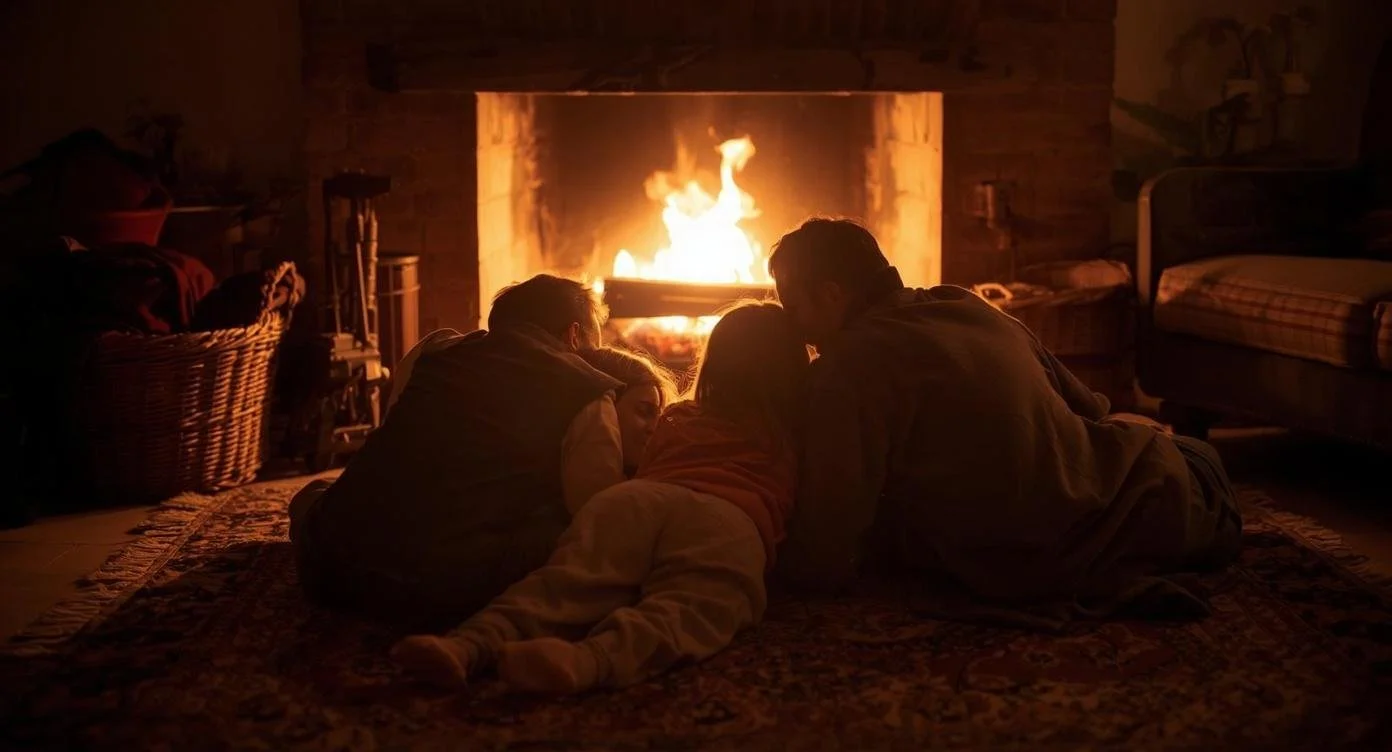
Fireside snuggles are the perfect way to unwind and slow down.
And forget perfection — this is the kind of warmth we all need this season.
8. Model Calm for Your Kids
Children feel what you feel. Your calm is their compass.
Breathe, stretch, or meditate in the morning — even 5 minutes helps.
Ask for help from grandparents or friends; most are happy to lend a hand.
Step outside for a short solo walk or play a calming track if you feel overwhelmed.
Your calm presence helps your child feel safe — and safety fosters better sleep.
9. When You Get Home, Reset with Intention
If your schedule unravels (and it will!), here’s how to recover:
Resume your normal bedtime and bedtime routine immediately.
Reset everyone’s internal clock with morning and late-afternoon walks.
Within 3–4 days, everyone’s sleep rhythm will settle back into place.
Routine and regularity always win.
10. Remember: The Goal Is Connection, Not Perfection
Sleep matters, but so does joy. If your family stays up too late laughing, sharing treats, or celebrating — that’s still rest for the soul.
The holidays are about connection, and the routine can wait until Monday.
You’re doing great. 💛
FAQs About Holiday Travel, Stress, and Sleep
Q1. How do I help my child sleep better while traveling?
Bring familiar items from home, keep bedtime routines consistent, and use white noise or travel blackout curtains to reduce distractions.
Q2. What if my toddler skips naps during travel?
That’s okay. Offer quiet time instead — the goal is rest, not perfection.
Q3. What if my baby skips naps during travel?
That’s okay too. Try again an hour or two later — rest is the goal, not a strict schedule.
Q4. How can I prevent jet lag from ruining our trip?
Use sunlight, regular meals, and consistent wake times to help the body adjust.
Q5. My family has late-night gatherings — how do I keep bedtime sane?
Keep part of your bedtime routine, like reading or a cuddle, and get back on track the next night.
Q6. Is it okay if we eat and drink more during the holidays?
Of course! Just stay hydrated and return to balanced meals when you’re home.
Q7. How long does it take to recover normal sleep after travel?
Usually 2–4 days. Routine, light exposure, and patience make all the difference.
Conclusion: Gentle, Flexible, and Joyful
Holiday travel and sleep disruptions are temporary — what lasts are the memories. By staying flexible, packing familiar comforts, and letting go of perfection, your family can rest and rejoice this season.
Remember: the goal isn’t perfect sleep — it’s joyful connection and a sense of calm wherever you are.
At Little Dipper Sleep, we deeply understand the importance of quality sleep for individuals of all ages. We have years of experience helping families discover the healthy sleep they need to thrive. The team at Little Dipper Sleep has developed evidence-based programs and techniques, tailored to your specific needs and preferences, that will help you and your loved ones achieve a peaceful and restful night's sleep. With Little Dipper Sleep, stellar sleep is on the horizon. Let's discover your best sleep together by setting up your free consultation today!