Why Your Sleep Has Changed in Perimenopause (and Why It Can Get Better)
You used to be able to enjoy a little indulgence without your sleep holding it against you. The second margarita, the late night nachos, or a pint of ice cream while Netflixing might have thrown you off a tad. But now, one glass of wine can have you wide awake at 3am, and sometimes those wake-ups haunt you even when you haven't indulged at all! Then, to our bleary-eyed dismay, just a few nights of irregular sleep can leave us feeling completely wrecked.
If your sleep has changed in perimenopause, I'm sorry, and you're also in very good company. There are significant biological changes behind our collectively crappy sleep at this stage of life.
The short version: Sleep often gets harder in perimenopause, and changing hormones are a big part of why. Shifts in progesterone and estrogen can make your nervous system less settled overall, affect how your body regulates temperature, and weaken your internal clock’s day and night signals. Stress and the mental load of this stage of life can then amplify those changes, making sleep even harder. The hopeful part is that sleep in perimenopause can improve with the right support, even in the middle of this transition.
In a review that combined the results of many studies on sleep after menopause, roughly half of women reported a sleep disorder (Salari 2023). In the Study of Women's Health Across the Nation (SWAN), a long-running study of midlife women, trouble falling asleep and staying asleep became more likely as women moved through the menopausal transition (Kravitz 2008). Changing sleep in perimenopause is a common, well-documented, predictable shift tied to changing hormones, and you did not cause this madness by choices you have made!
So please, please, please don't give up on good sleep. More researchers and clinicians are paying attention to how perimenopause affects sleep, and what they're learning gives us real reasons for hope.
Why does sleep change in perimenopause?
Hormones shift during perimenopause. Progesterone and estrogen can swing up and down unpredictably during this time (Grub 2021) before they eventually decline. And unfortunately, our sleep quality is often along for the ride.
If you still have a cycle, where you are in it may change how you sleep from one week to the next. Research on sleep across the cycle is mixed, and patterns vary a lot from woman to woman. Some notice lighter sleep in the days before their period.
Progesterone and your brain's calming signal
Progesterone is often described as a natural calming signal for the brain. As progesterone declines, that calming effect may weaken, which can mean lighter, more broken sleep and a nervous system that struggles to settle.
Estrogen, hot flashes, and night sweats
Estrogen affects sleep in more than one way. In SWAN, lower levels of estradiol, the main form of estrogen before menopause, were linked to more trouble falling and staying asleep (Kravitz 2008). One of the most noticeable ways this shows up is through temperature. Waking up hot, flushed, or (my personal favorite) soaked in your own sweat is one of the most common things I hear from women in perimenopause.
Your brain keeps your core temperature inside a comfortable range. During the menopausal transition, that range appears to narrow, so a small rise in body temperature can set off a hot flash or night sweat (Freedman 2005; Archer 2011). In a randomized trial of 141 women with frequent hot flashes, hot flashes were the most common reason women reported waking at night, and women whose nighttime hot flashes decreased tended to report better sleep (Pei 2024). Lab studies have been less clear about how much hot flashes themselves disrupt sleep (Freedman 2005; Bianchi 2016), so they're likely one piece of a larger picture.
Hormones and your body clock: why you may feel tired and wired
Hormones and your body clock work hand in hand. Your circadian rhythm is your body's internal clock, and over about 24 hours, it tells you when to feel alert and when to wind down, partly by timing hormones like cortisol in the morning and melatonin at night. Estrogen and other sex hormones can also influence how this clock runs (Begemann 2025).
When your body clock is running strong (and your hormones are steadier!), the difference between day and night is clear. You feel alert during the day, and by bedtime your body sends a strong signal that it's time to sleep. As estrogen swings and declines, that contrast may begin to blur. You might not feel as ready for sleep at bedtime, your sleep may be lighter and easier to interrupt, and your energy may dip, or nosedive, during the day. That may be part of why some women feel tired and wired at the same time.
Melatonin plays a part too. This hormone helps signal that it's nighttime, and its nighttime rise tends to get smaller as we get older (Pace-Schott 2011), which may weaken that sleepy signal even more.
Daily habits like light exposure and bedtimes shape this signal too, so yes, our choices matter. But hormonal shifts are a big part of the story, and for too long they've been brushed aside as personal failings or "just deal with it" complaints.
Alcohol, late dinners, and perimenopause sleep
So let's talk about those everyday choices. With your hormones already shifting, the little luxuries you used to enjoy may come with a bigger price these days, and alcohol is a prime example. Research shows that even a low dose of alcohol can reduce REM sleep, the stage when most dreaming happens (Gardiner 2024), and that nights with alcohol tend to bring more broken sleep, even when that sleep lasts longer (Thompson 2024). A nightcap can feel relaxing and still change the quality of your sleep.
So why does it seem to hit harder now? Alcohol might help you drift off faster, but as your body processes it, sleep tends to become more disrupted in the second half of the night (Ebrahim 2013). In perimenopause, many women are already dealing with lighter, more easily interrupted sleep, so the two effects compound.
Alcohol may also make hot flashes and night sweats more likely. Two studies, including one of more than 11,000 women, found that women who drank were more likely to report bothersome hot flashes and night sweats (Kwon 2022; Coronado 2026).
There's very little research on whether perimenopause makes us more sensitive to alcohol itself. But I talk with women in perimenopause all the time, and not handling alcohol the way we used to is one of the things I hear most. I'm in it myself, and I feel it too. My kids are finally old enough to put themselves to bed, and I can't celebrate afterward with an adult beverage. Well, I can, but I'll pay for it, often by waking up uncomfortably hot.
Late dinners and irregular schedules can affect sleep in a similar way. Your body clock uses cues like mealtimes and the times you go to bed and wake up to keep track of day and night, so eating late or shifting your sleep times sends it mixed signals (Calcaterra 2026). When your hormones are already making sleep a little shakier, there's less room to absorb these inconsistent signals, so that 9pm pizza or working late may affect you more than they used to.
It can feel like a loss to realize how intentional you have to be about sleep now, when it used to come more easily. I feel that deeply, and we have every right to complain. Fortunately, none of this is all or nothing. Being mindful about things like alcohol, late meals, and your schedule works more like a dial than an on/off switch. A late night out or a glass of wine at a celebration won't undo your progress. Personally, I'd rather make sleep-friendly choices most of the time and feel well rested, but as my kid would say: "You do you, Boo Boo." I support you either way!
If you'd like a simple list of sleep-friendly habits to start with, grab my free Perimenopause Sleep Checklist. And keep reading, because there's more to the story (and more reasons for hope) below.
How stress and sleep feed each other in perimenopause
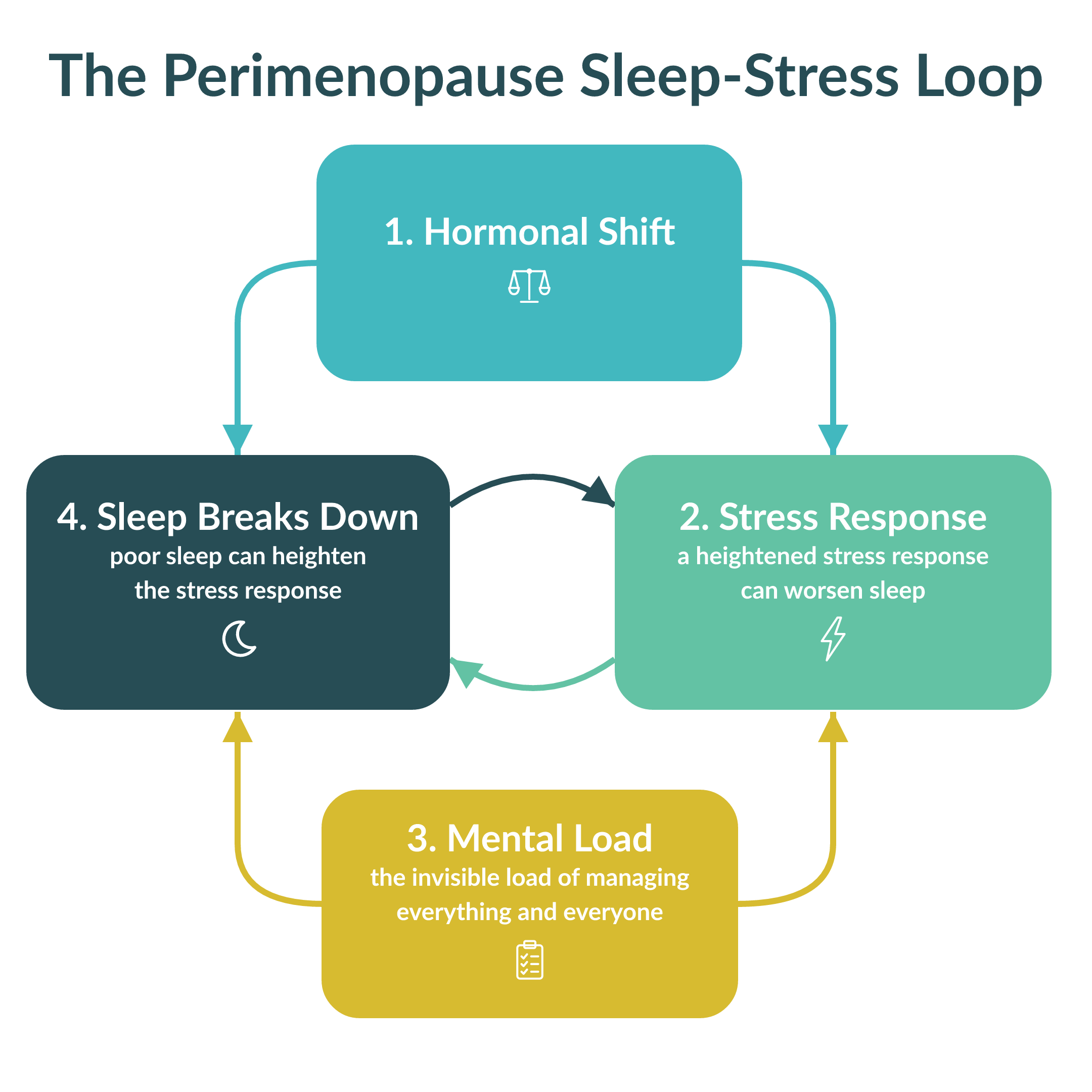
In perimenopause, stress and sleep can get stuck in a vicious feedback loop. Here's how it works:
Hormone shifts get things started, reducing sleep quality and often leaving you more easily stressed.
Stress keeps your body on alert at night, so you wake more easily and struggle to fall back asleep.
After a rough night, you're running on empty and more reactive the next day.
That reactivity makes it harder to wind down at bedtime, so another rough night follows.
Poor sleep fuels stress, stress fuels poor sleep, and the cycle repeats.
On top of all that, the mental load of this stage of life, from work, kids, aging parents, and being the one who remembers everything, lights the whole thing on fire.
But please do not give up hope! You absolutely have the ability to interrupt this cycle.
Can perimenopause insomnia get better?
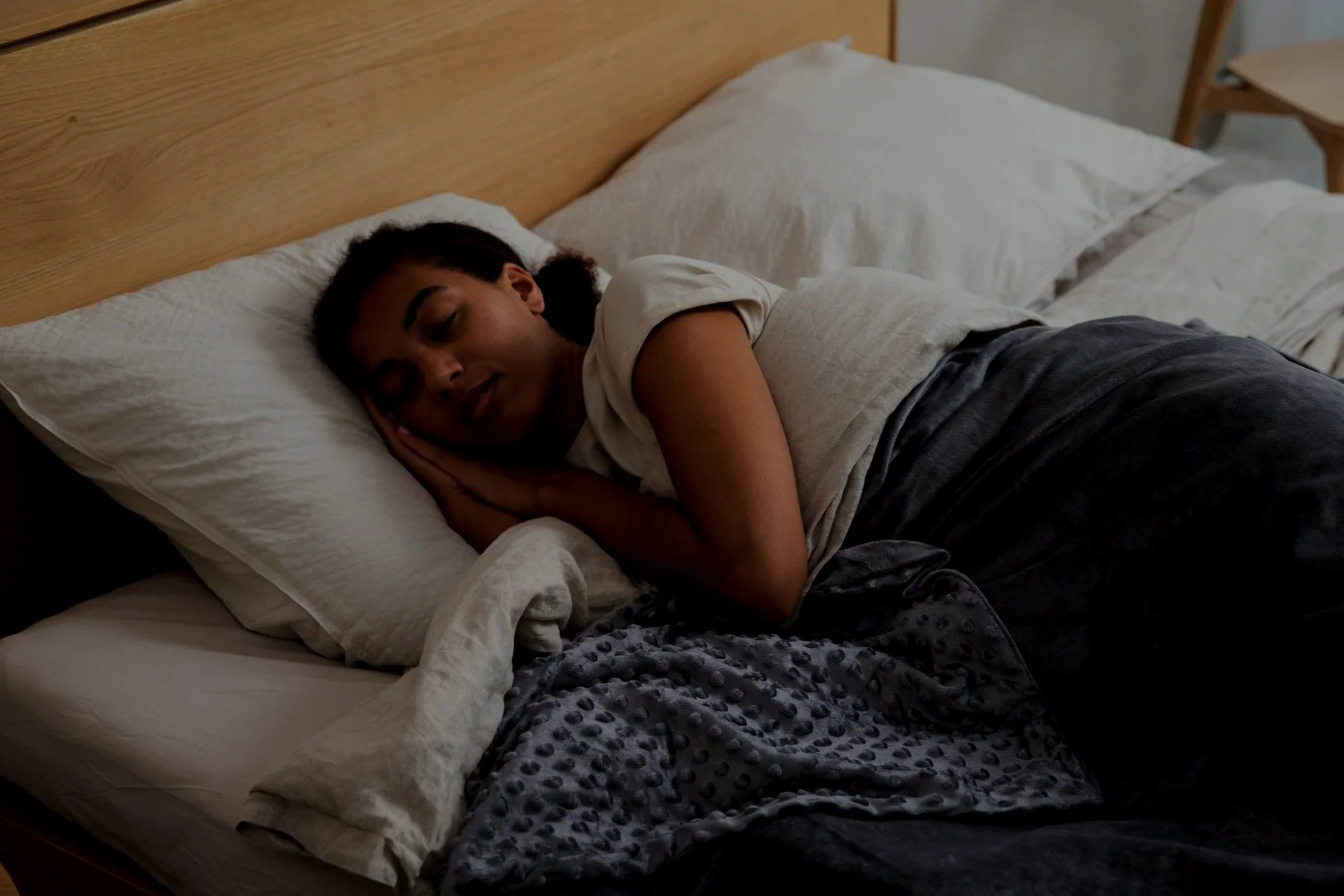
Yes, you have the power to improve your sleep during perimenopause, and the research here is encouraging. In a clinical trial of women in perimenopause and after menopause who also had hot flashes, 70% of those in a structured sleep skills program were no longer in the insomnia range after eight weeks, compared with 24% of women who received general menopause education (McCurry 2016). When researchers pooled four trials, this kind of program helped insomnia more than any other approach they tested (Guthrie 2018).
There's also a lot you can do to strengthen your day and night signals. Simple habits like a consistent wake time, morning light, and dimmer evenings help your body clock tell day from night more clearly, which can make it easier to feel sleepy at bedtime and alert during the day. Download my Perimenopause Sleep Checklist for all the suggestions.
You can't stop your hormones from shifting, but you can give your body clock clearer signals to work with.
Results vary from person to person, but the takeaway is a hopeful one: your sleep can improve, even while your hormones are still changing.
Where to start?
My free Perimenopause Sleep Checklist walks through small, doable habits in four areas that work together to support better sleep:
Strengthening your body clock: Clearer day and night signals can help counter some of what shifting hormones are blurring, so you feel sleepier at night and more alert during the day.
Calming your nervous system: With less of progesterone's calming effect, your body may need more help settling down. Simple, evidence-based practices fit easily into your day and can make a real difference, including helping to break the stress-sleep cycle.
Changing how you talk to yourself about sleep: Worrying about sleep adds stress at exactly the wrong moment, so gentler, more realistic thoughts can take some fuel off the fire.
A plan for the nights you're awake anyway: Some wake-ups will still happen, and having a plan keeps a rough hour from turning into a stressful night.
Inside, you'll find specific habits for each area. You don't need to try them all at once. Changing a few things at a time tends to be easier to stick with, so pick one or two habits, give them a few weeks, and build from there.
Want support with your perimenopause sleep?
I'm opening a small, live perimenopause sleep group. In four sessions over eight weeks, you'll learn how to strengthen your body clock, calm your nervous system, examine the thoughts and behaviors that affect your sleep, and build a plan for the nights you're on the sleep struggle bus. Between sessions, you'll put your own sleep plan into practice, and when we meet, I'll coach you through what's working and how to adjust, alongside other women who get it. Join the interest list to be the first to hear when enrollment opens.
Frequently Asked Questions about Perimenopause & Sleep
Is it normal for sleep to change in perimenopause?
Yes, very. In a pooled analysis of studies, roughly half of women reported a sleep disorder after menopause (Salari 2023), and in SWAN, sleep problems became more likely as women moved through the menopausal transition (Kravitz 2008). Changing sleep at this stage is common and tied to shifting hormones, so you’re not doing anything wrong.
Why does alcohol affect my sleep more in perimenopause?
Alcohol tends to make sleep lighter and more broken in the second half of the night (Ebrahim 2013), and many women in perimenopause are already sleeping more lightly, so the two effects add up. Drinking has also been linked to more bothersome hot flashes and night sweats (Kwon 2022; Coronado 2026).
Can perimenopause insomnia improve without medication?
Often, yes. In a clinical trial, 70% of women in a structured sleep skills program were no longer in the insomnia range after eight weeks (McCurry 2016), and a pooled analysis of four trials found this approach helped insomnia more than the other options tested (Guthrie 2018). Talk with your provider about what’s right for you, since medication can also be helpful for some women.
Why do I wake up at 3am in perimenopause?
Several things can contribute at once. Night sweats, lighter sleep as progesterone declines, alcohol, late meals, and a stress response that’s quicker to switch on can all make middle-of-the-night waking more likely. If you also feel exhausted during the day or have low mood, ask your provider about sleep apnea, which in women may look like insomnia more often than loud snoring (Dunietz 2025).
When should I see a doctor about perimenopause sleep problems?
If poor sleep is affecting your daily life, or you're dealing with frequent night sweats, mood changes, much heavier periods, or signs of sleep apnea (a condition where breathing pauses during sleep), a healthcare provider can help, ideally a menopause-certified one. The Menopause Society has a directory of certified practitioners at menopause.org.
This post is for education and isn't medical advice.
References
Archer DF, et al. (2011). Menopausal hot flushes and night sweats: where are we now? Climacteric. 14(5):515-528. 10.3109/13697137.2011.608596
Begemann K, et al. (2025). Endocrine regulation of circadian rhythms. npj Biological Timing and Sleep. 2(1). 10.1038/s44323-025-00024-6
Bianchi MT, et al. (2016). Nocturnal hot flashes: relationship to objective awakenings and sleep stage transitions. Journal of Clinical Sleep Medicine. 12(7):1003-1009. 10.5664/jcsm.5936
Calcaterra G, et al. (2026). "More Kairos, Less Chronos": sleep, circadian rhythms and the path to cardiovascular, neurological and metabolic protection. Diabetes Research and Clinical Practice. 238:113387. 10.1016/j.diabres.2026.113387
Coronado PJ, et al. (2026). Prevalence of vasomotor symptoms and the associated risk factors: the "Mi Menopausia" app study. Maturitas. 209:108958. 10.1016/j.maturitas.2026.108958
Dunietz GL, et al. (2025). OSA in women: associations with reproductive aging and screening challenges. Chest. 169(3):803-812. 10.1016/j.chest.2025.08.001
Ebrahim IO, et al. (2013). Alcohol and sleep I: effects on normal sleep. Alcoholism: Clinical and Experimental Research. 37(4):539-549. 10.1111/acer.12006
Freedman RR. (2005). Hot flashes: behavioral treatments, mechanisms, and relation to sleep. American Journal of Medicine. 118(Suppl 12B):124-130. 10.1016/j.amjmed.2005.09.046
Gardiner C, et al. (2024). The effect of alcohol on subsequent sleep in healthy adults: a systematic review and meta-analysis. Sleep Medicine Reviews. 80:102030. 10.1016/j.smrv.2024.102030
Grub J, et al. (2021). Steroid hormone secretion over the course of the perimenopause: findings from the Swiss Perimenopause Study. Frontiers in Global Women's Health. 2:774308. 10.3389/fgwh.2021.774308
Guthrie KA, et al. (2018). Effects of pharmacologic and nonpharmacologic interventions on insomnia symptoms and self-reported sleep quality in women with hot flashes: a pooled analysis of individual participant data from four MsFLASH trials. Sleep. 41(1):zsx190. 10.1093/sleep/zsx190
Kravitz HM, et al. (2008). Sleep disturbance during the menopausal transition in a multi-ethnic community sample of women. Sleep. 31(7):979-990. PubMed 18652093
Kwon R, et al. (2022). Alcohol consumption patterns and risk of early-onset vasomotor symptoms in premenopausal women. Nutrients. 14(11):2276. 10.3390/nu14112276
McCurry SM, et al. (2016). Telephone-based cognitive behavioral therapy for insomnia in perimenopausal and postmenopausal women with vasomotor symptoms: a MsFLASH randomized clinical trial. JAMA Internal Medicine. 176(7):913-920. 10.1001/jamainternmed.2016.1795
Pace-Schott EF, Spencer RMC. (2011). Age-related changes in the cognitive function of sleep. Progress in Brain Research. 191:75-89. 10.1016/B978-0-444-53752-2.00012-6
Pei M, et al. (2024). Hot flashes and sleep disruption in a randomized trial in menopausal women. American Journal of Obstetrics and Gynecology. 232(1):102.e1-102.e9. 10.1016/j.ajog.2024.07.022
Salari N, et al. (2023). Global prevalence of sleep disorders during menopause: a meta-analysis. Sleep and Breathing. 27(5):1883-1897. 10.1007/s11325-023-02793-5
Thompson LM, et al. (2024). Alcohol use predicts longer but more fragmented sleep: a daily diary study of alcohol, sleep, and PTSD in nurses. International Journal of Behavioral Medicine. 32(5):738-749. 10.1007/s12529-024-10308-z

Little Dipper Wellness was founded by Liz Harden, MPH, a certified pediatric & family sleep coach, public health-trained educator, and certified mindfulness and yoga instructor.
With over a decade of clinical experience, Liz specializes in individualized, evidence-based sleep support for families. She and her team also offer provider training, consulting, and speaking for healthcare providers, early intervention teams, and family-centered professionals. Her approach is grounded in current sleep science and responsive to each family’s unique needs, values, and circumstances.
Liz also supports adults through insomnia and the sleep changes of perimenopause, drawing on CBT-I principles and mindfulness.
Because every human deserves stellar sleep.